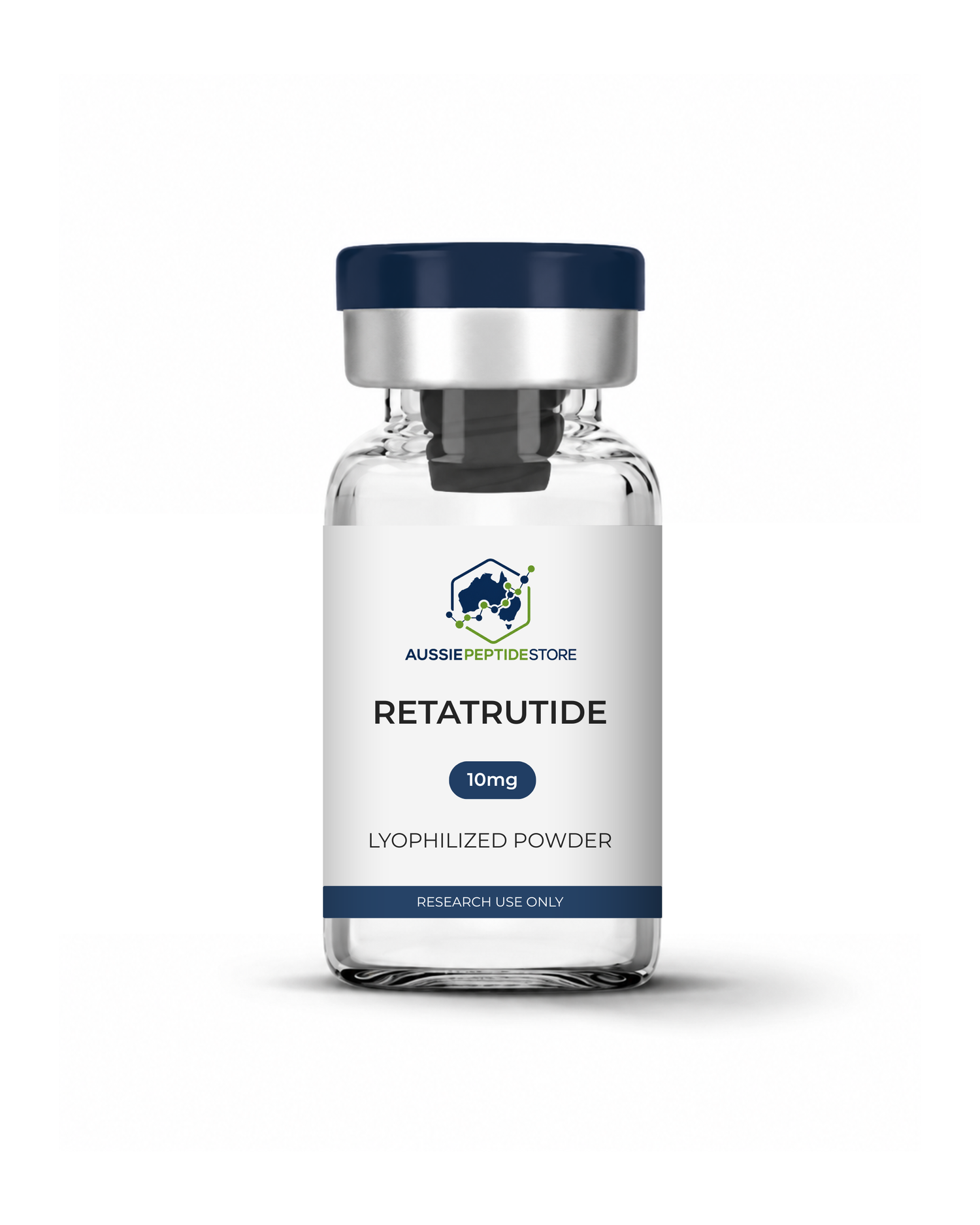

How to Reconstitute Retatrutide: Bac Water & Dosing Calculator Guide
Share
How to reconstitute Retatrutide: a lab handling guide
Retatrutide ships as a lyophilised (freeze-dried) powder and has to be reconstituted with bacteriostatic water before it can be used in research. Getting the volume right is the difference between a known, repeatable concentration and guesswork. This guide walks through the reconstitution process, how to calculate bacteriostatic water volumes, and how to store the solution. If you need supplies, Bondi Labs stocks Retatrutide and bacteriostatic water from Australian stock.
For laboratory research handling only. Not instructions for human use.
What you need
- Your Retatrutide vial (for example 10mg)
- Bacteriostatic water as the diluent
- A sterile syringe for measuring and adding the water
- Alcohol swabs for the vial stoppers
- The reconstitution calculator
Step by step
- Let both vials reach room temperature and swab the rubber stoppers with alcohol.
- Draw your chosen volume of bacteriostatic water into the syringe.
- Insert the needle and let the water run slowly down the inside wall of the peptide vial. Never fire it directly onto the powder.
- Do not shake. Swirl gently or leave it to dissolve on its own until the solution is clear.
- Label the vial with the concentration and date, then refrigerate.
How much bacteriostatic water for a 10mg Retatrutide vial?
There is no single "correct" volume. The volume you add sets the concentration, so it depends on how concentrated you want the solution. A simple worked example: adding 1mL of bacteriostatic water to a 10mg vial gives a concentration of 10mg/mL, so each 0.1mL contains 1mg. Adding 2mL to the same vial gives 5mg/mL. Use the reconstitution calculator to match the vial strength to your target concentration and avoid arithmetic errors.
Quick reference table
| Vial strength | Bac water added | Resulting concentration |
|---|---|---|
| 10mg | 1 mL | 10 mg/mL |
| 10mg | 2 mL | 5 mg/mL |
| 20mg | 2 mL | 10 mg/mL |
| 30mg | 3 mL | 10 mg/mL |
Storage after reconstitution
Once reconstituted, Retatrutide should be kept refrigerated at 2 to 8°C. Avoid repeated freeze-thaw cycles, keep it out of direct light, and use bacteriostatic (rather than sterile) water when you want a multi-use solution, since the benzyl alcohol content helps limit microbial growth. Sealed, unopened lyophilised vials are more stable and can be stored cold until you are ready to reconstitute.
Common mistakes to avoid
Spraying water directly onto the powder can cause foaming and degrade the peptide; shaking does the same. Not labelling the vial leads to concentration mix-ups later. Reusing the same needle risks contaminating a multi-use vial. And skipping the calculator is the most common source of dosing-math errors in research handling.
Get everything in one kit
The Retatrutide Premium Kit bundles vials with bacteriostatic water, syringes and swabs so you have a complete reconstitution set-up in one order. Browse all research peptides →
Frequently asked questions
What water is used to reconstitute Retatrutide?
Bacteriostatic water is the standard diluent for multi-use research vials because its benzyl alcohol content helps limit microbial growth.
Can I shake the vial to dissolve it faster?
No. Shaking can damage the peptide. Add the water gently against the vial wall and let it dissolve or swirl lightly.
How long does reconstituted Retatrutide last?
Kept refrigerated and protected from light and freeze-thaw cycles, reconstituted peptide solutions are generally used within a few weeks; exact stability depends on your storage conditions.
Disclaimer: Supplied strictly for laboratory research use only. This is a handling reference, not medical or dosing advice for humans, and none of these statements has been evaluated by the TGA or FDA.